
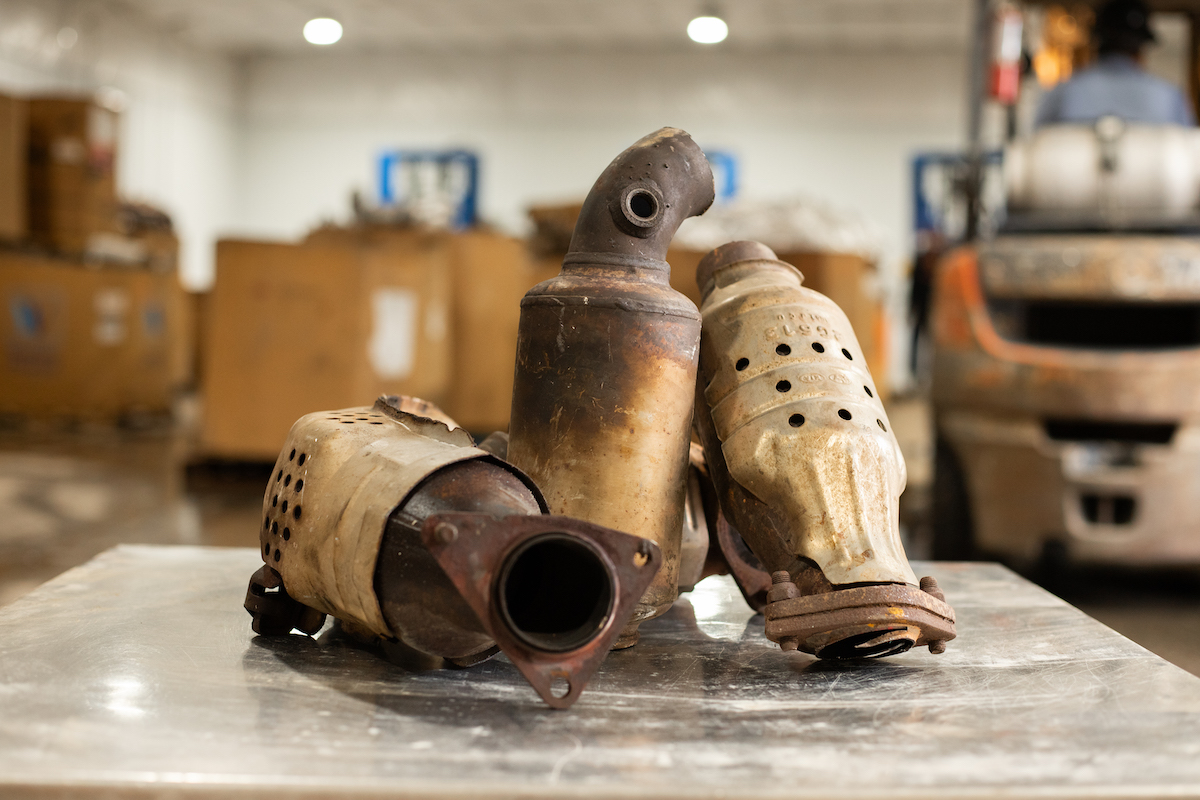
Catalytic Converter Recycling:
Transparency, Trust, and the Importance of the Assay Process
Catalytic converter recycling has become one of the most specialized areas of the automotive core industry. With rising precious metal prices and increased regulatory scrutiny, transparency and accuracy are more important than ever. At the center of this process is the assay - a critical step that determines the true value of a catalytic converter.
For Maxcore Industries, assay driven transparency is a cornerstone of how catalytic converters are handled and valued across the core supply chain.
What Is an Assay and Why Does It Matter?
An assay is a scientific analysis used to determine the precise concentration of precious metals - platinum, palladium, and rhodium - contained within a catalytic converter. Because converters vary widely in composition, an assay provides the most accurate way to determine real value.
Without proper assay data, pricing is often based on estimates or visual identification alone, which can lead to inconsistencies and mistrust. In contrast, assay - backed valuation ensures all parties are working from verified data rather than assumptions.
The Assay Process in Catalytic Converter Recycling
The assay process typically involves several key steps:
-
Decanning and Sampling – The converter’s internal substrate is removed and processed.
-
Grinding and Homogenization – Material is ground into a fine powder to ensure uniform sampling.
-
Laboratory Analysis – Advanced testing methods measure the exact precious metal content.
-
Reporting – Results are documented and used to calculate value based on current market prices.
This process eliminates guesswork and provides clarity for buyers and sellers alike.
Why Transparency Builds Long-Term Partnerships
In an industry where trust is critical, transparency sets professional core suppliers apart. Salvage yards and recyclers want to know their material is being evaluated fairly. Processors want consistency and reliability. Assay-backed reporting creates confidence across the entire transaction.
Maxcore Industries prioritizes transparency by working with established processing partners and using data-driven methods to support accurate valuations. This approach reduces disputes, improves efficiency, and strengthens long-term relationships throughout the supply chain.
Choosing the Right Partner for Catalytic Converters
Not all catalytic converter buyers operate the same way. When selecting a partner, recyclers and salvage yards should look for:
-
Clear explanations of the assay process
-
Willingness to share results and methodology
-
Industry experience and strong references
-
Compliance with environmental and regulatory standards
As a full-line core supplier, Maxcore Industries meets these expectations by combining industry expertise with scalable systems designed to handle catalytic converters responsibly and efficiently.
Looking Ahead
As global demand for precious metals continues to rise and sustainability becomes a larger priority, catalytic converter recycling will only grow in importance. Assay-driven processes will remain essential for maintaining trust, accuracy, and fairness in the market.
By focusing on transparency and long-term partnerships, Maxcore Industries continues to play a vital role in helping recyclers, salvage yards, and remanufacturers navigate the evolving catalytic converter landscape with confidence.